User Experience
10.2021
New Approaches to Conducting User Studies
Your Contact

Yijun
User Experience
User Experience
We specialize in solving problems where human experience meets technology. Discover how we transform your ideas into tangible solutions – from the very first concept through continuous optimization.
Extraordinary times call for extraordinary approaches
How can user studies be conducted meaningfully and effectively without physical presence – especially during periods of contact restrictions? This was the question the Allround Team set out to answer. And the result was a forward‑looking solution.
While home office and online meetings became the new normal, the rules in retail and public spaces were clear: keep your distance, minimize contact. Yet it is precisely in such phases that understanding user needs becomes even more crucial. Even when product development slows down, one question remains central: How do people respond to new designs, functions, or interfaces? And how can we capture these reactions in a valid way?
Remote studies as the solution
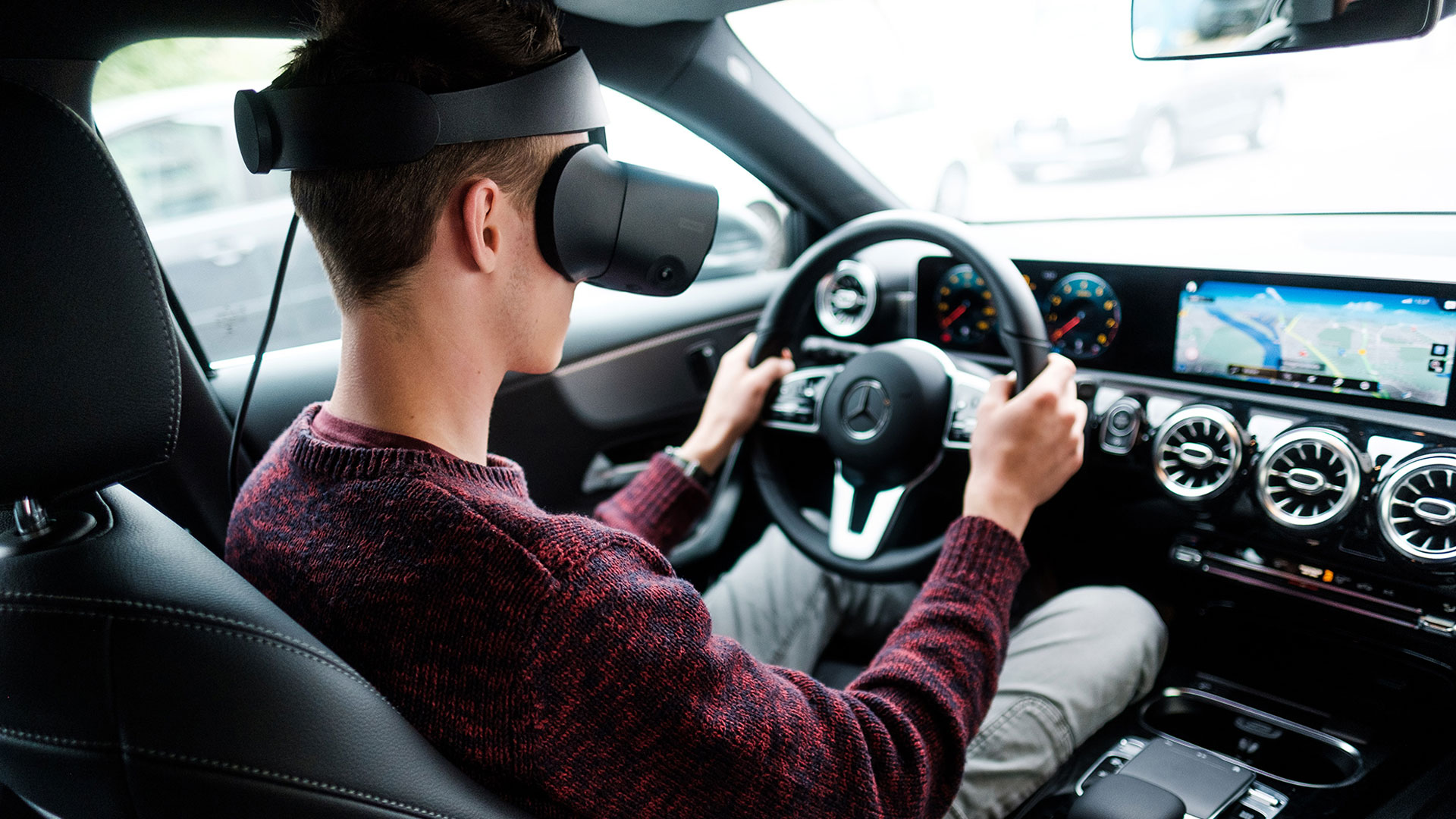
The Allround Team adopted contactless study formats early on. Instead of inviting test participants into our facilities, we developed a system that enables participation from home – independently, flexibly, and safely. To do so, we relied on a technology our development team already had extensive experience with: Virtual Reality (VR).

VR as an immersive testing environment
The idea came quickly: we send VR headsets to test participants and let them immerse themselves in a simulation that presents the videos and concepts to be evaluated. The advantages are obvious:
- Realistic representation enables authentic reactions
- Standardized procedures ensure comparable results
- Contactless execution minimizes infection risks and increases flexibility
Challenges & solutions
The first prototype revealed two key challenges:
- Different levels of experience with VR – not all participants are familiar with the technology.
- No on‑site study moderation – responses need to be captured and documented automatically.
Our solution: a user‑friendly system that is intuitive to operate and equipped with an integrated recording function. This allows responses to be captured directly and transcribed later – without any physical supervision.

More than a technical solution
With expertise, empathy, and methodological rigor, we developed a system that not only works technically but is also thoughtfully designed from a social and psychological perspective. Test participants can take their time in a familiar environment, focus on the content, and share their impressions – without pressure and without haste.
For many, using a VR headset is a new experience, yet interest in innovative technologies is high. Our studies show that with the right guidance and a clear process, even complex testing scenarios can be conducted successfully in a remote setting.
Conclusion
Remote studies using VR are not just a response to pandemic‑related restrictions – they represent a step toward future‑ready research that is flexible, inclusive, and technologically advanced. And they demonstrate that even in extraordinary times, extraordinary insights are possible – when we are willing to explore new paths.
Inspiring and activating
Dive deeper: These posts from the same category offer new perspectives, inspiring impulses, and further ideas that spark curiosity and invite you to keep reading.